How to Water Indoor Plants: The Ultimate Guide
A complete walkthrough of the 'drench and wait' method, drainage, and environment checks to keep your houseplants thriving.
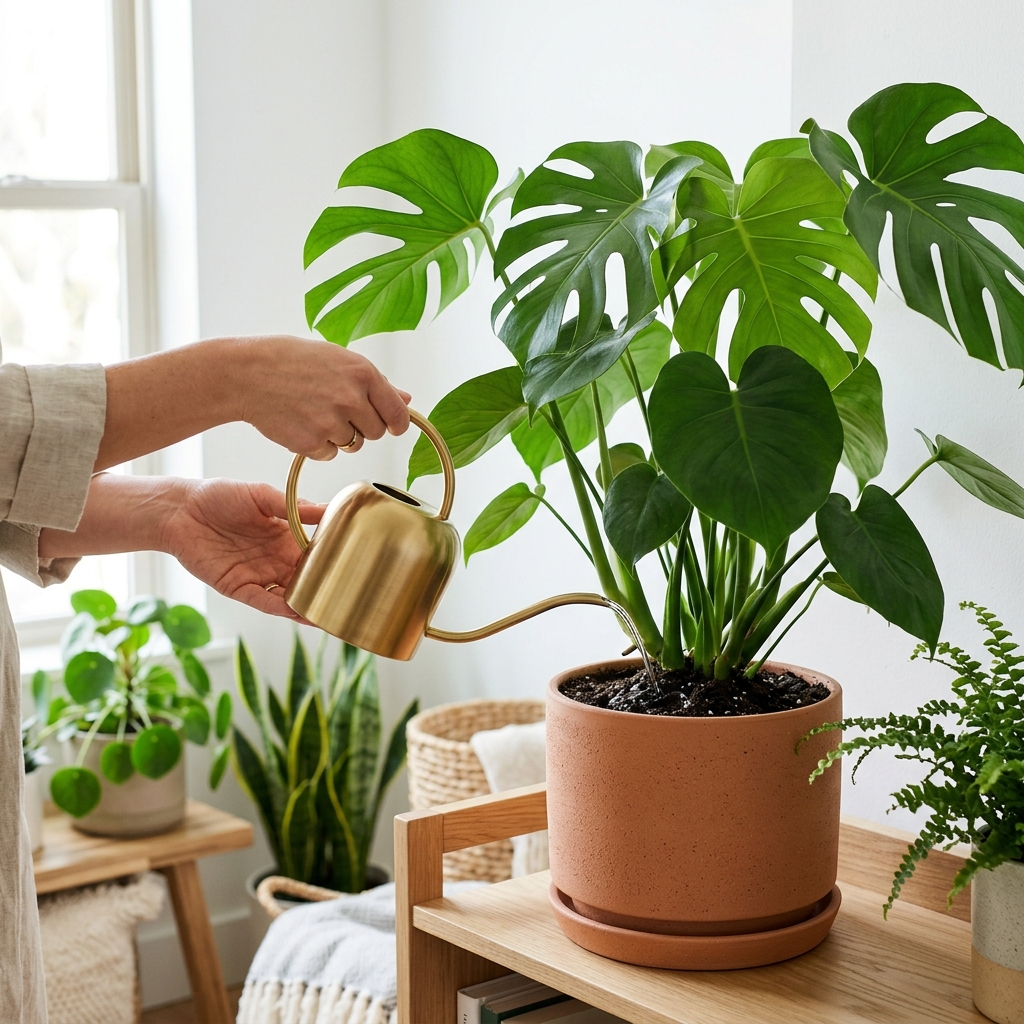
Watering indoor plants is often viewed as a simple chore, but it's the number one reason houseplants fail to thrive. Without the natural cycle of rain, wind, and sun, we have to artificially mimic a plant's ideal hydration environment.
Table of Contents
The Drench, Don't Drizzle Method
One of the most common mistakes is giving a plant a small sip of water every few days. In nature, when it rains, it pours. When you water your plants, you should drench the soil until water runs freely out of the drainage holes at the bottom of the pot.
- Encourages deep roots: Water that only wets the top inch of soil causes roots to stay shallow.
- Flushes minerals: A heavy watering flushes out excess salts and minerals from tap water and fertilizers.
Drainage is Non-Negotiable
If your pot doesn't have a hole in the bottom, you are playing houseplant roulette. Water pools at the bottom of closed pots, suffocating roots and leading to root rot. Always use pots with drainage holes. If you love a decorative pot without a hole (a cachepot), keep the plant in a cheap plastic nursery pot and slip it inside.
The Finger Test
Schedules are helpful, but they don't account for changing seasons, humidity, or sunlight. Before watering, always perform the finger test:
- Stick your index finger into the soil up to your second knuckle (about 2 inches deep).
- If it feels damp or cool, do not water. Check again in a few days.
- If it feels completely dry, it's time to water.
Ready to calculate your plant's exact needs?
Use our plant watering calculator to determine the perfect watering schedule based on your specific environment.
Go to CalculatorPractice These Fundamentals On an Easy Starter Plant
The drench-and-wait method above applies to nearly every houseplant, but it's easiest to learn on a forgiving species. Try it with a Pothos, a Snake Plant, or a ZZ Plant — all three tolerate an imperfect finger test far better than a fussier species while you build the habit.
Related Species

Written by Abhay Singh Chauhan
Software developer and plant hobbyist with a 30-plant collection. Passionate about bringing horticultural science and technical precision to everyday plant care.